Training
How to Remember CS2 Lineups and Use Them in Matches
Watching a lineup once creates familiarity, not match-ready recall. See how short lessons, active questions and well-timed reviews turn grenade knowledge into something you can use under pressure.
Updated August 30, 2026
You watch a lineup, copy the crosshair position and think: got it. Then three days later the score is 11–11, your team asks for that smoke, and the picture in your head is suddenly missing.
That does not mean you are bad at learning grenades. It means that seeing a lineup once and recalling it under pressure are different skills. A guide can show you what to throw. Training is what makes the answer available when the round asks for it.
Seeing a lineup is not the same as remembering it
A useful lineup is a bundle of details: when to use it, where to stand, what to aim at, which throw input to use and where the grenade lands. While the guide is open, all of those details feel obvious because the answer is still on the screen.
Close the page and the job changes. Now your brain has to rebuild the answer from a situation: We are taking A. Which smoke removes the defender? Where was the stand position? Was this a jumpthrow?
That act of pulling the answer out of memory is the part that makes it easier to find next time. Simply rewatching the same clip can create confidence without reliable recall. A question exposes the difference immediately.
Why short reviews beat one long grenade session
Memory naturally becomes less accessible when you do not use it. The answer is not to grind the same 30 lineups every day. That wastes time on the ones you already know and still lets the difficult ones disappear.
A better rhythm has two parts:
- Active recall: answer before looking at the guide. Even an incorrect attempt tells you exactly which detail is weak.
- Spaced review: return to the lineup after some time has passed. A difficult card comes back sooner; a reliable one can wait longer.
This is why a few focused minutes across several days are more useful for long-term recall than one huge session followed by silence. You spend less time reviewing what is already solid and more time on the grenades that are actually at risk.
What GetReplay's grenade training actually does
The trainer turns that learning rhythm into a short lesson:
- Learn a useful nade. You see the tactical result, the stand and crosshair positions, the throw input and the demo instead of memorising an isolated screenshot.
- Answer without the solution in front of you. Visual questions make you recognise the correct position, landing or effect from memory.
- Correct the weak detail. If you miss, the lesson shows what was wrong and can bring the grenade back after other questions. Repeated trouble becomes a clear target for the Work on mistakes mode.
- Return when a review is due. Correct answers move a lineup further into the future. A mistake shortens that gap, so the trainer spends your time where it matters.
- Keep the session small. A standard lesson is designed for roughly 3–5 minutes and mixes scheduled reviews with a limited number of new grenades.
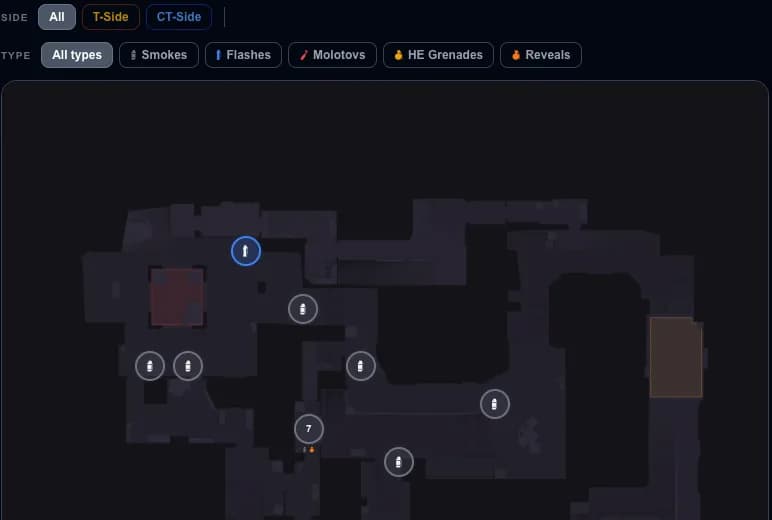
You do not have to maintain a spreadsheet, choose review dates or remember which lineup failed last week. The home screen separates new grenades from due reviews and keeps your progress by map visible.
What this changes in a real CS2 match
The benefit is not a bigger number on a dashboard. It is having one more good option available during the round.
- You spend less attention reconstructing the throw. The stand, reference and input come back as one pattern instead of five loose facts.
- You recognise the opportunity earlier. Remembering what a lineup achieves helps you call for it before the timing is gone.
- Your mistakes become a practice list. The trainer keeps difficult grenades visible instead of letting you avoid them.
- Your map pool becomes dependable. Learning a small set for the maps you actually play is more valuable than bookmarking hundreds you cannot recall.
- Pressure has less to erase. Training cannot remove match stress, but a well-retrieved memory is more reliable than a screenshot you only recognise when it is open.
That is how grenade knowledge improves your game: not by making every throw automatic overnight, but by turning more round situations into decisions you are prepared to make.
Training memory does not replace throwing the grenade
There are two separate skills here:
- Recall: knowing which grenade solves the situation and remembering the setup.
- Execution: walking to the exact spot, aligning the crosshair and releasing the throw cleanly in CS2.
GetReplay trains the first skill and gives you the visual material for the second. A local practice server is still the best place to rehearse the physical throw. Use the repeat last grenade command and bind to test a difficult lineup from both sides, then return to the trainer so the setup stays in memory after the practice server is closed.
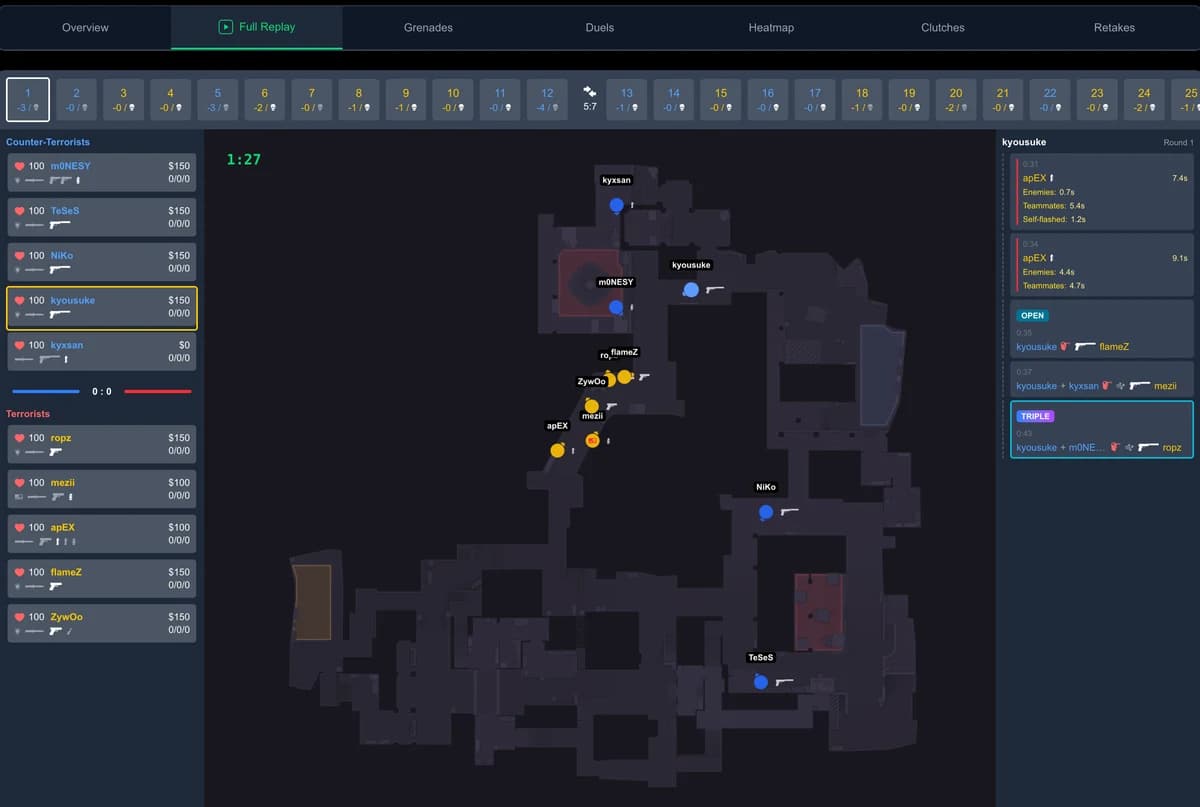
Your own matches close the loop. In a 2D replay of your demo, check whether the grenade landed as expected and whether you used it at a useful moment. Memory, execution and match judgement reinforce one another, but they are not the same thing.
A routine that is easy to keep
- Choose only the maps you currently play.
- Open the standard lesson and clear the reviews that are due. Three to five focused minutes is enough for the day.
- Use Work on mistakes when the same grenades keep failing, or Favorites when you are preparing a specific set.
- Take the two or three least certain throws to a local server and execute them for real.
- In your next demo, check one grenade you tried to use. Keep it if it solved the round; revisit it if the setup or timing failed.
FAQ
How often should I train? Short, regular sessions are the point. Open the trainer when reviews are due; you do not need a long daily grind. Missing a day is less important than returning and continuing the schedule.
Do I need to know a lineup before it appears? No. Lessons can introduce new grenades with the complete setup before asking about them. Reviews then bring learned grenades back later.
Does “mastered” mean I can always throw it in a match? It means your recall has survived increasingly spaced reviews. You should still execute the throw on a practice server and check it in real matches.
Should I learn every grenade on a map? No. Start with a compact set that fits your positions and common plans. A smaller pool you can actually recall gives you more value than a complete library you only recognise on a guide page.